



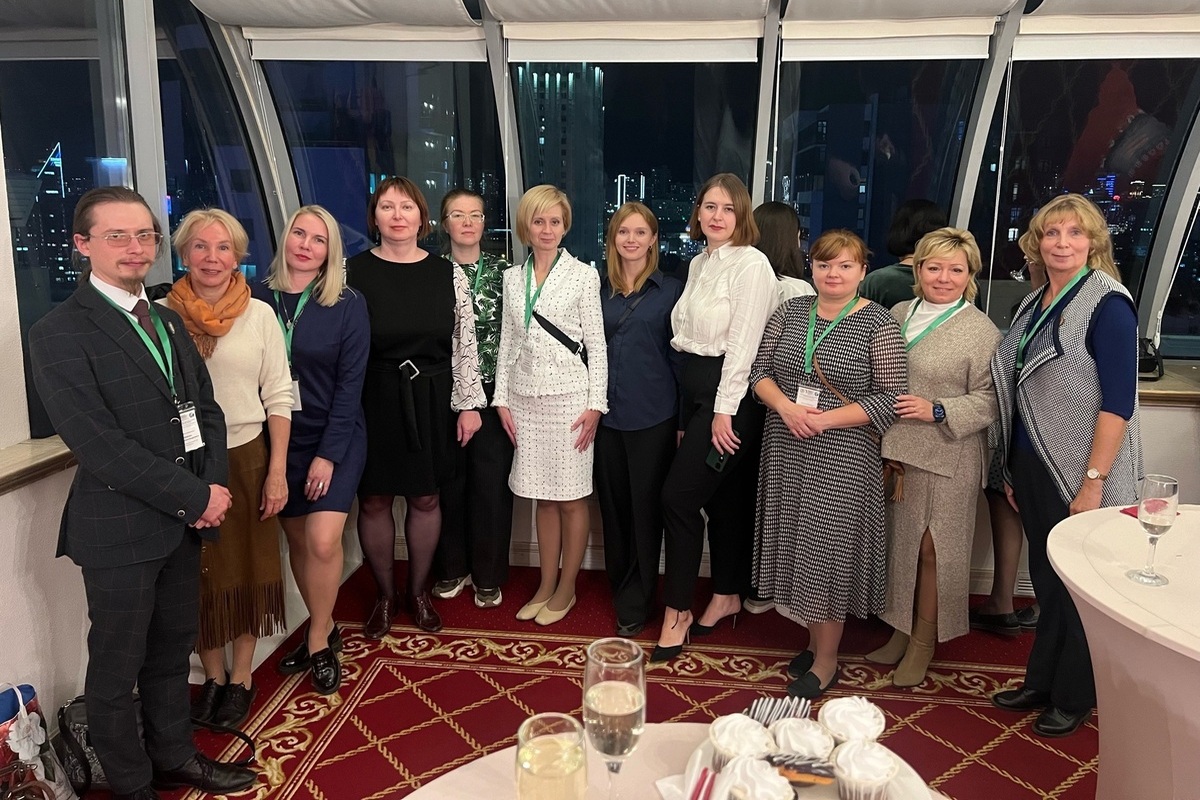
The annual meeting of the Russian Society of Plant Physiologists was held on October 3-8 at the Institute of Natural Sciences and Mathematics of the Ural Federal University in Ekaterinburg. The All-Russian scientific conference with international participation “Experimental Plant Biology and Climatic Challenges” gathered 200 scientists from Moscow, St. Petersburg, Nizhny Novgorod, Novosibirsk, Saratov, Syktyvkar, Kazan and other cities of Russia, as well as from Belarus, Azerbaijan, Turkey, Bulgaria, India, South Africa and Japan. The team from the Karelian branch of SPP was one of the most numerous with 11 people, including young specialists.
The gathering discussed the most topical issues of today, both in the field of plant physiology and in related disciplines: molecular and ecosystem-based mechanisms of photosynthesis and carbon sequestration by plants; plant production process and its limiting factors in natural ecosystems and agricultural plant communities; remote methods of productivity assessment and adjustment; plants in the changing environment and climate; phytobiotechnologies.
– The conference covered a wide range of topics: molecular and physiological mechanisms of photosynthesis, climate-regulating function of vegetation, how plants respond to environmental changes, how plants can be used in biotechnology, and many others. It is gratifying to see that scientists from the Institute of Biology and the Forest Research Institute presented at all sessions,- said Natalia Galibina, Deputy Director for Science of the Forest Research Institute KarRC RAS.
Our colleagues talked about the biochemical and molecular aspects of wood formation in Scots pine, the response of crops to the application of pulp and paper mill wastes to soil, photoperiodic stress in plants, the effect of short light-dark cycles on the development of tobacco seedlings, and others topics.
At the end of the conference, young specialists from the Karelian Society of Plant Physiologists were awarded. Ksenia Nikerova, Head of the Analytical Laboratory of the Forest Research Institute KarRC RAS, won in the nomination “Best Oral Presentation by Young Scientists”. The researcher gave a talk on the “Spatial and temporal parameters of tissue sampling in figured-wood curly birch plants for the xylogenesis studies”. She pinpointed the spatial and temporal points where the processes of wood formation occur and are concentrated. The scientist emphasized the importance of identifying quantitative maxima of biochemical and molecular-genetic markers in the tissue gradient and the gradient of xylogenetic stages in plants of common silver birch and curly birch. Only such 'fine-tuned' sampling will then permit to study the mechanisms of tree tissue formation properly. The results of the study were published in the journals Protein & Peptide Letters and Russian Journal of Plant Physiology.
Another prize winner in this nomination was Yulia Moshchenskaya, Senior Researcher at the Laboratory of Woody Plant Physiology and Cytology of the Forest Research Institute KarRC RAS. Her presentation was about the “Contribution of plant nucleases to trunk tissue formation in woody plants".
KarRC RAS
in social media


in social media
News
October 14, 2024
Plant physiologists deliver successfully at a conference in Yekaterinburg
Researchers from the Karelian Research Center RAS took part in the annual assembly of the Russian Society of Plant Physiologists (SPP). This year, the event was hosted by the Ural Federal University in Yekaterinburg. Scientists from the Institute of Biology and the Forest Research Institute KarRC RAS delivered 11 presentations, some of which were prepared by young scientists.
Researchers from the Karelian Research Center RAS took part in the annual assembly of the Russian Society of Plant Physiologists (SPP). This year, the event was hosted by the Ural Federal University in Yekaterinburg. Scientists from the Institute of Biology and the Forest Research Institute KarRC RAS delivered 11 presentations, some of which were prepared by young scientists.